How to get more tips on Uber, Lyft, DoorDash, and Instacart
Learn how tips work across your gig apps.

Tips can be all over the place. One ride they pay a lot, the next they vanish, and it's hard to tell if anything you did mattered. So we asked Sergio to break it down.
But first, take our quick newsletter survey so we can better cater the topics to what you want to read.
I am going to start by being controversial: “Stop begging for tips. Start understanding how the tip game actually works.”
If you're driving Uber or Lyft, the tip comes after the ride, so the service you provide can directly influence whether that passenger reaches for their phone and tips you.
But if you're delivering DoorDash, Uber Eats, Instacart, or Grubhub, it's a completely different animal. In most cases, the customer has already decided what you're worth before you ever accept the order. That $2 tip isn't waiting for you to magically turn it into $10 because you smiled at the customer's front door.
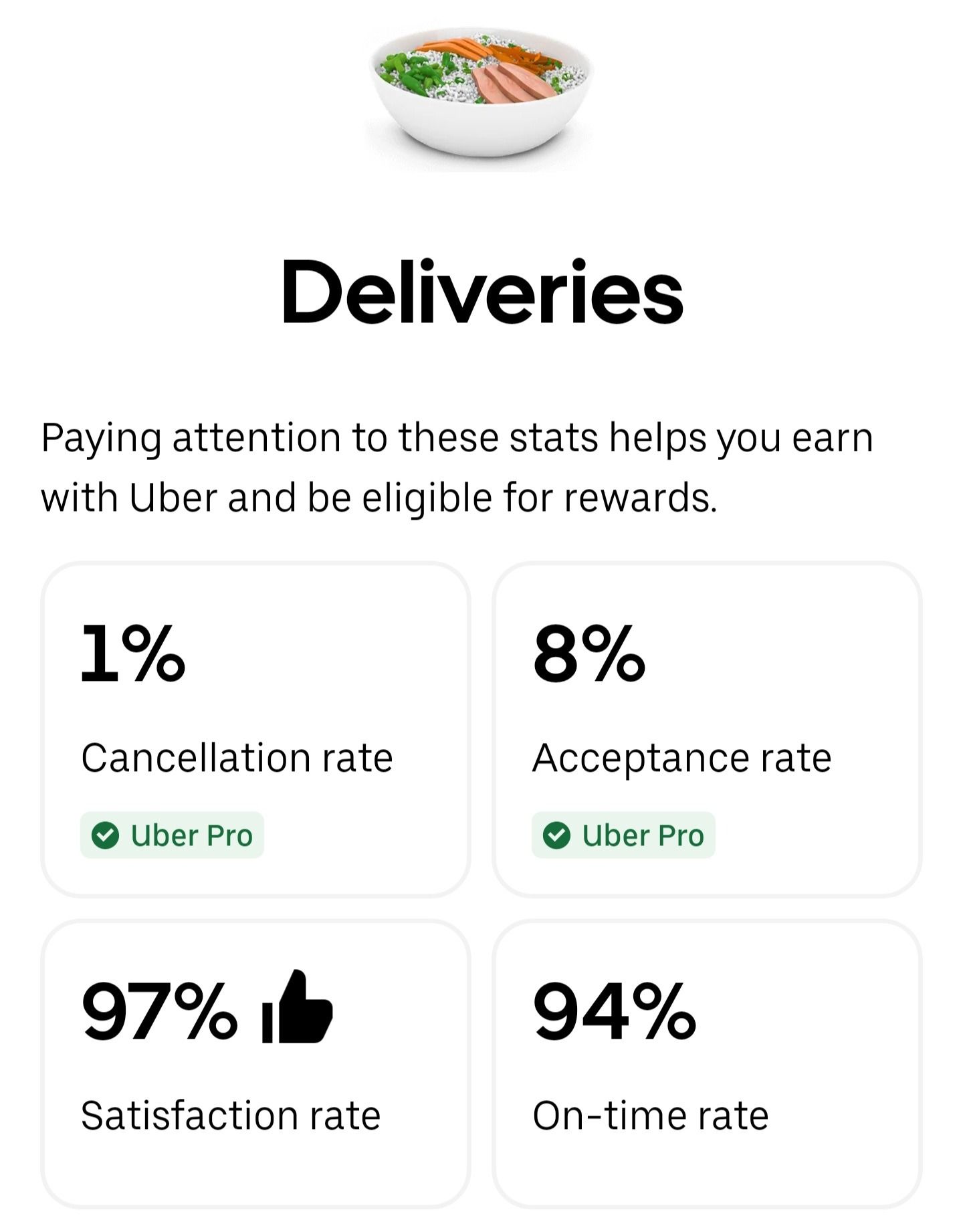
The real money is in understanding what you can influence. I've been doing this long enough to know that drivers spend way too much time worrying about things they can't control. Tips are one of them.
Why do tips matter more now?
Here's another reality drivers and couriers need to face: tips matter more because platforms are paying less. The platforms have squeezed base pay and shrunk upfront fares, and the cost of doing this work has increased substantially. Your gas, insurance, maintenance, tires, repairs, and depreciation don't care whether Uber, Lyft, or DoorDash had a good quarter and their stocks have gone up. Your car keeps getting older, and your costs keep accumulating. At the same time, customers are being asked to tip everywhere; tip fatigue is a real issue these days.
So drivers need to understand that a tip can increasingly be the difference between an acceptable trip and a terrible one. I'm not saying drivers should depend on tips to make a bad offer profitable; that's backward. I'm saying that when base pay doesn't adequately compensate you for your time and vehicle, every legitimate tip dollar matters more than it used to.
The smart drivers don't chase tips, but they also don't dismiss them. You want to position yourself to capture every dollar you're entitled to while making sure the underlying trip still makes economic sense.
Read Sergio’s 5 ways to increase hourly earnings.
Why am I not getting tips on DoorDash?
Let's clear up one of the biggest misconceptions about delivery tipping. On DoorDash, the tip is basically a bid. The customer enters the tip when they place the order. You see the offer, check the payout and mileage, and decide whether you're willing to accept it.
If DoorDash puts $4.50 on your screen for a 5-mile delivery, you aren't thinking, " Maybe I'll provide such amazing service that this customer will reward me with another $10. You're thinking, Decline & Recline! And that's exactly why low-tip orders can sit around waiting for somebody desperate enough to take them.
This is where drivers need to stop confusing customer service with economics. You cannot provide $20 worth of customer service to manufacture a $20 tip that wasn't there in the first place. The base tip is already part of the customer's decision. That doesn't mean you can't earn more. It means you need to understand where the opportunity actually exists.
How to get more tips on DoorDash
The first rule is simple, don't screw up the delivery. I know that sounds obvious, but spend enough time watching delivery drivers, and you'll realize that obvious doesn't mean universal. Read the special delivery instructions. If the customer says "leave at the side door," leave it at the side door. If they say don't knock, don't knock. Take a useful delivery photo. Don't leave the food sitting in the middle of a sidewalk. Don't spill the drinks. Don't crush the pizza.
You'd be amazed how many drivers try to optimize their hourly earnings while also creating reasons for customers to complain. And yes, customers can increase their tip after delivery. DoorDash allows customers to add or increase a tip during the delivery process or afterward through the appropriate channels, potentially for up to 30 days after completion.
That's where your service matters. You can't change the original bid, but you can influence whether the customer says, " This driver actually did a great job.
Do Uber Eats customers tip?
Uber Eats works similarly, but don't make the mistake of assuming the tip is permanently locked in when you accept the order.
A customer can set a tip before delivery and has a limited period after delivery to change it, also known as tip baiting. Uber Eats has rolled out a Tip Guarantee feature in many markets to combat tip baiting. Customers can also add a tip after the order is completed. Uber's help information varies by page, so rather than expecting one magic number, think roughly a month for adding a post-delivery tip, and check the current option in the app.
The practical strategy is the same: make the delivery boring. And I mean that as a compliment. The food arrives intact. If it is hot food, use a hot bag; if it's cold food, make sure it stays cold. No one likes melted ice cream! You place it exactly where they asked. You take a clear photo. You send the delivery notification. You disappear.
You don't need to knock on the door like you're serving a subpoena. You don't need to write, " Please don't forget to tip your driver! You don't need to send the customer your life story. Do the job correctly and move on.
Want more ways to optimize your time? Learn how to use AI to your advantage.
How do tips work on Instacart?
Instacart is where the tip conversation gets much more interesting because you're actually interacting with the customer's shopping experience. You're not simply picking up a bag that's already sitting on a restaurant shelf.
You're walking through the grocery store looking for 40 different items while the customer changes their mind about substitutions, the store is out of their favorite yogurt, and the produce department looks like a battlefield. That means you have more influence over the tip. Communication matters.
If something is out of stock, don't mindlessly substitute it. Give the customer options. If they don't respond, use common sense. Pay attention to quality when picking fruits or vegetables. Don't throw eggs underneath a gallon of milk. These little things separate a professional shopper from someone trying to get in and out of the store as quickly as possible.
But Instacart also has the biggest tip-related problem, tip baiting! Customers can change their tip for 24 hours after delivery. However, Instacart now says that if a customer removes a tip without reporting an order issue, Instacart will cover the shopper's tip up to $10. Instacart also says fewer than 0.5% of tips are removed after delivery, and customers who repeatedly remove tips can face account consequences.
How to get more tips on Uber and Lyft
Here's where delivery drivers and rideshare drivers need to understand the fundamental difference. On Uber and Lyft, tips come after the ride. That means the ride itself is your sales pitch.
I've been driving Uber in Los Angeles for years, and I've learned something that I think a lot of drivers get backward: you don't need to become everybody's best friend to get tips.
Some passengers want to talk. Talk to them. Some passengers have headphones on before they even close the door. Leave them alone. Some want restaurant recommendations. Give them one. Some are exhausted after a 12-hour workday and just want to stare out the window. Let them sit in silence.
A clean car is super important. Smooth driving is important. Helping somebody with luggage is important. Not driving like you're being chased by the police is important. You don't need to manufacture conversation. And please don't become one of those drivers who spends the entire ride campaigning for a tip. Let the experience speak for itself.
Use Mystro to more easily drive for both Uber and Lyft.
Uber riders can tip up to 30 days after a trip, so don't assume a passenger who doesn't tip immediately won't tip later. Lyft also allows riders to add a tip for up to 30 days after a ride through Ride History or the trip receipt. The rating-screen tip is more time-sensitive, generally available within two hours and before the rating/payment process is completed.
What is tip baiting, and is it real?
Tip baiting is when a customer posts a large tip to get an order accepted quickly, then reduces or removes it after delivery. It's real, but it's also one of those topics drivers love to exaggerate. Instacart is where this matters most because customers can easily modify their tip within 24 hours.
DoorDash is different. Reducing a tip isn't a simple button customers press in the app; it usually involves contacting support. Uber Eats also gives customers a limited window to change a pre-set tip.
And Grubhub has an important protection: if a diner removes a tip after a driver accepts the order, the driver still receives the tip amount that was in effect when the offer was accepted. So don't believe every Facebook group horror story you read.
For Instacart, keeping documentation can make sense when you're dealing with a disputed tip. But you don't need 4,000 screenshots on your phone because somebody told you every customer is trying to steal your money.
Stop chasing tips. Start chasing profit.
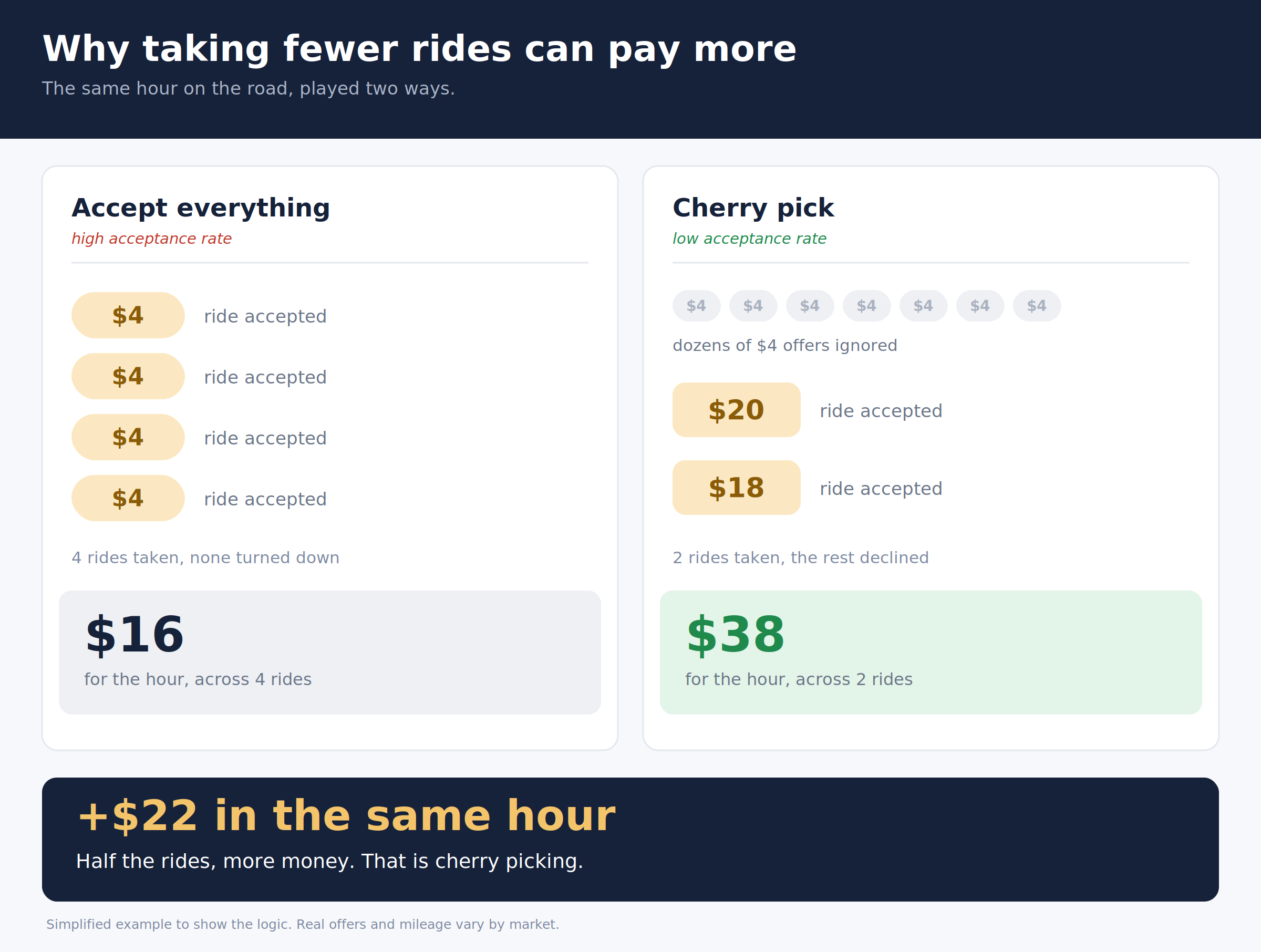
This is the part I really want drivers to understand. A tip is not revenue you should build your entire business around. It's a bonus for a job well done. Your business model has to work before the tip. If I accept a $6 delivery going 8 miles because I'm hoping the customer might tip me another $10, that's not a business strategy. That's gambling.
The same goes for rideshare. If you're driving a $12 trip that takes 35 minutes and you're telling yourself, " Maybe they'll tip,” you're already negotiating against yourself. I would rather take a good-paying trip and get no tip than take a terrible trip hoping for one.
This is why I constantly tell drivers to look at the entire economics of the trip. Time, miles, deadhead miles, vehicle expenses, depreciation, and not just the dollar amount displayed on the screen.
And if you're multi-apping, another variable is opportunity cost. While you're waiting on a bad Uber Eats order, you might be missing a profitable DoorDash offer. While you're sitting in a rideshare airport queue, another app might have a much better opportunity 3 miles away.
That is exactly where a tool like Mystro comes in. Instead of staring at one app and hoping something good appears, Mystro helps drivers manage multiple gig apps, compare opportunities, and stay focused on the business rather than constantly bouncing between screens.
Tips are great. I like tips. Every driver likes tips. But I didn't spend all these years driving Uber and studying the gig economy so I could become an expert at hoping a stranger adds $3 to a bad trip. I want to know what I'm making per mile, what I'm making per hour, what the vehicle is costing me, and whether the trip is worth my time. If the passenger or customer wants to throw a tip on top of that, I'll happily take it. But my business has to make sense before the tip arrives.
And in this business, being busy is easy. Profitability is the hard part.
Have some hot takes or tips you want to share? Get paid and write for this newsletter.
This post first appeared in The Mystro Newsletter — driver tips, earnings strategies, and Mystro updates, in your inbox every week.