How to Drive for Uber and Lyft Simultaneously

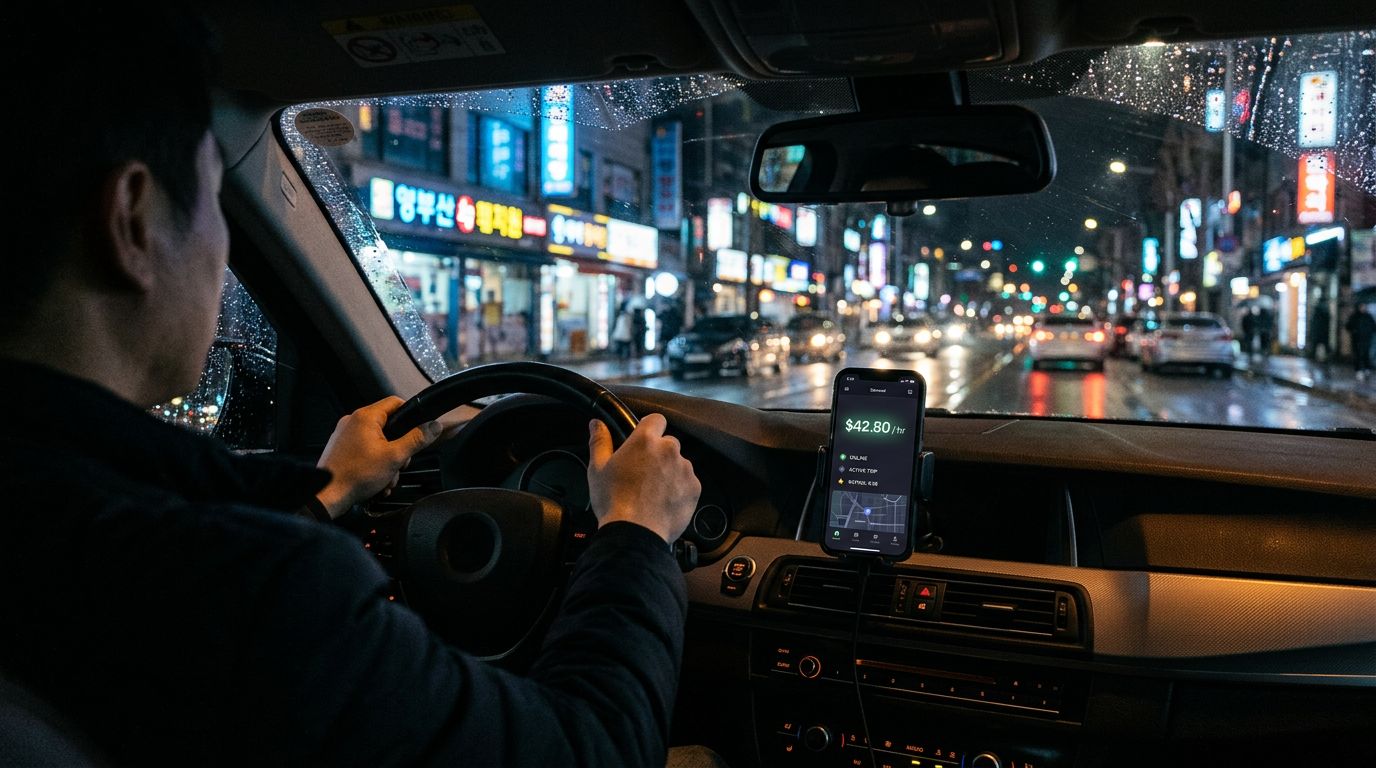
Picture a phone mounted on your dash, both driver apps open, and a fare ping hitting one of them every few minutes. That is what many full-time rideshare drivers in the US now look like on a normal shift. Running Uber and Lyft at the same time, sometimes with DoorDash or Uber Eats in the mix, has gone from clever hack to standard practice.
The question is no longer whether to multi-app. The questions are: Is it allowed? How do you set it up so you are not fumbling with two screens at 45 miles per hour? And how do you make it actually pay off instead of just doubling your distracted driving?
This guide answers all three. Mystro is the tool more than 100,000 drivers worldwide use to automate the hardest part, and it will come up a few times. The strategy works with or without it, but it works a lot faster with.
Yes, You Can Drive for Uber and Lyft at the Same Time (And Many Drivers Do)
This is the question every new driver asks, so let us answer it first. Neither Uber nor Lyft prohibits multi-apping in their terms of service. You are an independent contractor. You are free to work for competing platforms, and both companies know drivers do exactly that.
Industry analysis from Ridester in July 2025 found that 41 to 53 percent of gig drivers now regularly multi-app [1]. This is mainstream behavior, not a gray-area workaround.
Platforms respond to it with incentives, not bans. Uber Quest pays a bonus for completing a set number of trips in a window. Lyft runs similar ride challenges. Uber Pro tiers unlock perks as you hit points thresholds. None of those programs require you to stay off a competing platform. They are designed to make loyalty attractive, not mandatory.
The practical concern is not getting deactivated for multi-apping itself. It is getting deactivated for the downstream effects: showing up late to pickups, canceling too often, letting your rating slide. Those are risks to manage, not reasons to stay on one app.
How to Set Up Your Phone for Multi-Apping
You have three setups to choose from, and they sit on a spectrum from simplest to most optimized.
| Setup | Attention required | Missed-ping risk | Cost | Best for |
|---|---|---|---|---|
| One phone, manual toggle | High | Yes — both apps share bandwidth | None | Light or part-time drivers |
| One phone plus automation app | Low, hands-free | Reduced — other apps paused during a trip | Subscription (around $20/mo) | Full-time drivers |
| Two phones on separate networks | Medium (two screens) | None — separate networks | Second device + carrier | Drivers with chronic ping issues |
The network question matters more than most new drivers realize. On weaker connections, some drivers report a failure mode where running both apps on one phone causes pings to drop silently in the background — anecdotal but persistent on the Uber Drivers Forum [2]. The frustration: you do not know you missed the trip because the app never buzzed; you only notice you are getting fewer offers than the driver next to you.
One phone with automation solves this differently. Instead of asking the phone to hold both apps online all the time, an app like Mystro takes one app offline the moment you accept a trip on the other, then brings it back online when you drop off. You are never visible to two platforms at once during a ride, so there is no ghost-ping issue and no rating risk from double-accepting.
Two phones is the hardware-heavy answer. It works. It is also overkill for most drivers, and it gives you two screens to monitor instead of one.
The Manual Method: How to Toggle Between Apps Without Crashing Your Car
If you want to multi-app without a third-party tool, the mechanics are straightforward. The discipline part is harder.
- Log into both Uber and Lyft and go online on both.
- Wait for the first ping. Compare it against whatever the second platform is showing.
- Accept on whichever app offered the better trip.
- Immediately go offline or pause the other app.
- Complete the trip.
- When you drop off, go back online on both.
The part drivers get wrong is step 4. Leaving the other app online during a trip means a second ping will come in while you have a passenger. Ignoring that ping counts against your acceptance rate on some platforms, and accepting it while you already have a rider is how you earn a one-star review and a contract violation. The rule is simple: one active trip, one active app.
The practical issue with manual multi-apping is not the logic. It is the cognitive load. Every ping means glancing at the phone in the mount, reading the displayed fare, distance, and pickup time, deciding whether the numbers clear your threshold, then flipping to the second platform to pause it before getting back to driving, all inside Uber or Lyft's roughly ten-second decision window. Ten of those interactions in an evening adds up to real risk, and plenty of missed better offers because you were looking at the wrong screen at the wrong moment.
The Automated Method: Why Most Full-Time Drivers Switch to Mystro
Automation is the answer to the cognitive load problem. The Mystro Driver App does four things the manual method cannot do safely: it keeps Uber and Lyft online side by side and surfaces every offer in one place, it calculates and prominently displays $/hr and $/mi for every incoming offer, its Auto-accept and Auto-reject rules fire the moment they match, and it pauses the other platform the moment you accept (and flips it back online when you drop off). All hands-free.
The on-screen math is the quiet differentiator. When a ping comes in, Mystro calculates $/hr and $/mi for that specific offer and surfaces them prominently. Filters you set up — built around those numbers plus other factors like distance and pickup or dropoff area — decide whether the offer auto-accepts, auto-rejects, or surfaces for you to review within Uber and Lyft's standard ten-second window. Instead of guessing whether a $14 fare is worth 45 minutes of your life, the app tells you it works out to $18.67 per hour and either declines it or sends it through based on your threshold.
| Factor | Manual Multi-Apping | Automated Multi-Apping |
|---|---|---|
| Attention required mid-drive | Constant | None |
| Missed trips due to slow reaction | Common | Rare |
| Per-offer $/hr and $/mi visibility | You do the math | Calculated automatically |
| Safety | Compromised | Hands-free |
Mystro drivers see up to a 30 percent earnings increase, and more than 100,000 drivers worldwide run the app. Independent confirmation shows up in driver communities. On the Uber Drivers Forum, a long-running thread has drivers describing exactly what Mystro does in their own words: when you accept a ride on Uber, the app takes Lyft offline during the trip, then brings it back online when you finish [2].
The elephant-in-the-room question is whether this gets you in trouble. No Mystro user has faced individual account penalties for using the app. Lyft did temporarily block Mystro's platform access in 2019 before restoring it.
How Multi-Apping Actually Increases Your Earnings
The 20 to 40 percent earnings lift that gets quoted across the industry is a real number, and the mechanism is less exciting than it sounds [1]. It is not about finding secret high-paying trips. It is about eliminating idle minutes.
Run Uber alone and your phone goes quiet for five to ten minutes between rides in most markets. Add Lyft and a portion of those quiet minutes get filled. Add DoorDash or Uber Eats on top of that and you can stack paying work even during rideshare lulls. The math is cumulative across a shift:
- 5 extra active minutes per hour across an 8-hour shift equals 40 extra minutes of paid work.
- At a typical $25 per hour effective rate, that is roughly $17 of additional earnings per shift.
- Across a 5-shift week, you are looking at $85 in recovered income that would have been dead phone time.
The second earnings lever is trip selection. When only one platform is pinging you, the decision is take it or skip it. When two or three platforms are pinging, you get to pick the best one. Better fares, shorter pickups, better-rated neighborhoods. That optionality is where the higher end of the 20 to 40 percent range comes from.
The third lever is bonus stacking. Uber Quest and Lyft ride challenges run independently. A single shift can advance both, because each platform counts only the trips that ran on its own app. You are not double-dipping, you are running two bonus programs in parallel. Multi-apping is one of six earnings levers covered in our companion guide on how to increase earnings as a rideshare driver.
When You Should Not Multi-App
Multi-apping is not universally the right move, and most top-ranking articles skip the honest version of this discussion.
Skip multi-apping if any of these apply:
- You are new. Drivers with fewer than 200 trips are still building their rating and their market knowledge. Adding a second app on top of that increases mistakes and slows down the learning curve. Run one app for the first month, then layer in the second.
- Your market is busy enough that you are constantly getting good offers on one app. If you rarely sit idle between trips, multi-apping adds complexity without adding income. Multi-apping pays off most in slower markets where you would otherwise wait 10 to 15 minutes between pings.
- You rely on scheduling-heavy programs. Lyft scheduled rides and DoorDash time-block scheduling penalize you for going offline during a reserved window. If most of your income runs through scheduled slots, the offline-toggle habit will hurt you more than multi-apping helps.
The Ridester analysis also flags mental fatigue as a real cost. Roughly 30 percent of new multi-app drivers report significant fatigue in their first month [1]. That shows up as missed turns, canceled orders, and lower ratings. If you start multi-apping and your rating slides for two weeks, that is the signal to pull back.
Tips to Make Multi-Apping Pay Off on Your First Shift
A few practical rules separate drivers who profit from multi-apping from drivers who just burn more gas:
- Set a dollars-per-hour floor before you start driving, and do not accept below it. Anywhere from $20 to $40 per hour is a reasonable starting range — smaller markets sit at the low end, dense urban markets at the high end. For a detailed treatment of how to set the floor and what else to filter on, see how to filter out unprofitable rideshare trips.
- Prefer short, nearby pickups over high-fare distant ones. A $9 ride with a 3-minute pickup and a 12-minute trip works out to $36 per hour. A $14 ride with a 15-minute pickup and the same 12-minute trip works out to $31 per hour. The bigger fare looks better on paper but pays worse per minute.
- Never leave both apps accepting rides during a trip. One active trip, one active app.
- Uber's Upfront Fares and Lyft's destination preview put pay and destination right on the offer card — but raw fare isn't the number that matters. It's $/hr (fare divided by expected time). That mental math is fine on offer one, tedious by offer fifty; Mystro handles it for you automatically.
- Track your actual hourly earnings by app for a full week before you commit to a strategy. Your intuition about which app pays better is almost certainly wrong.
- If you install Mystro, start with a conservative rule like accept rides above $20 per hour only, then loosen it after a shift once you see what is passing and what is getting filtered out.
- Keep a mileage tracker running from the moment you log in. The IRS standard mileage deduction is the biggest tax write-off most rideshare drivers claim, and when you are splitting trips across two platforms, every mile you do not log is a deduction you forfeit at tax time.
If you want the dollars-per-hour math handled for you while you drive, that is exactly what Mystro does. You drive, it decides, and you keep your eyes on the road.
Frequently Asked Questions
Can you get banned from Uber or Lyft for driving for both?
No. Running both apps is not a terms-of-service violation on either platform. Ridester's 2025 analysis confirms that multi-apping itself does not breach Uber or Lyft rules as long as service quality stays high. What does get drivers deactivated is what sometimes comes with multi-apping: late pickups, frequent cancellations, and rating drops.
Do you need two phones to run Uber and Lyft simultaneously?
No. One modern smartphone handles both apps fine in most markets. Two phones solve network congestion problems that some drivers experience on shared cellular bandwidth, but for most drivers a single phone with either manual toggling or an automation app is enough.
What happens if you accept rides on both apps at once?
You will have an unhappy passenger. Whichever rider you pick up second will wait longer than expected, and the rating hit can be severe. The rule is one active trip per driver at all times. Multi-apping means running both apps online, not running both trips at once.
Is it better to drive for Uber or Lyft?
Neither is universally better. Pay rates, demand patterns, and driver perks differ by market and even by time of day. The useful version of this question is which one pays better for you, in your city, at the hours you work. The only way to know is to track your actual earnings on each app for at least a week, which is the argument for multi-apping in the first place.
How much more can you actually earn by multi-apping?
Industry data pegs the lift at 20 to 40 percent for drivers who run two or more platforms compared to drivers on a single app. Most of that comes from reducing idle time between trips, with the remainder from better trip selection and bonus stacking across platforms.
Closing
Multi-apping is allowed, it is mainstream, and the earnings lift is real. The catch is execution. Manual toggling works but it trades attention for income, and attention is what keeps you safe at 40 miles per hour. Automation closes that gap by handling the math, the offer review, and the offline-toggling between trips while you drive.
More than 100,000 drivers already use Mystro to run this setup hands-free. You can download Mystro from the App Store or Google Play in a few minutes. The earnings difference shows up on your first shift.
References
- Helling, Brett. "What Is Multi-Apping? Gig Drivers Boost Income by 40%." Ridester, July 30, 2025. https://www.ridester.com/what-is-multi-apping/
- Various drivers. "Uber lyft apps running at the same time." Uber Drivers Forum (uberpeople.net), July 2024. https://www.uberpeople.net/threads/uber-lyft-apps-running-at-the-same-time.498678/