Does your driver rating matter? Uber, Lyft, DoorDash, and Instacart deactivation thresholds
Learn when a low score costs you money, and when it's just noise.

Many drivers have reached out asking, ‘Should I be worried about my rating?’ So we passed the question on to someone who's watched that number longer than most. Sergio has driven rideshare and delivery for about a decade, usually running several apps at once, and he's seen exactly where a rating starts to cost you and where it's just noise. Here's his take.
But first, take our quick newsletter survey so we can better cater the topics to what you want to read.
You just finished a long shift, open the app, and there it is: 4.95 instead of 4.98. You don’t know which passenger gave you the bad rating, what you supposedly did wrong, or whether it will cost you money tomorrow.
Here’s the good news: for most drivers, a small rating drop like that doesn’t matter. Your rating becomes important when you start approaching a platform's minimum threshold or when it affects access to a specific program or benefit. Until then, obsessing over every decimal point is mostly wasted energy.
I know that because I've watched my own number move for years. I have completed over 11,000 rideshare trips and deliveries, about 70% of them for Uber. I've spent enough time staring at that rating to know when it matters and when it doesn't.
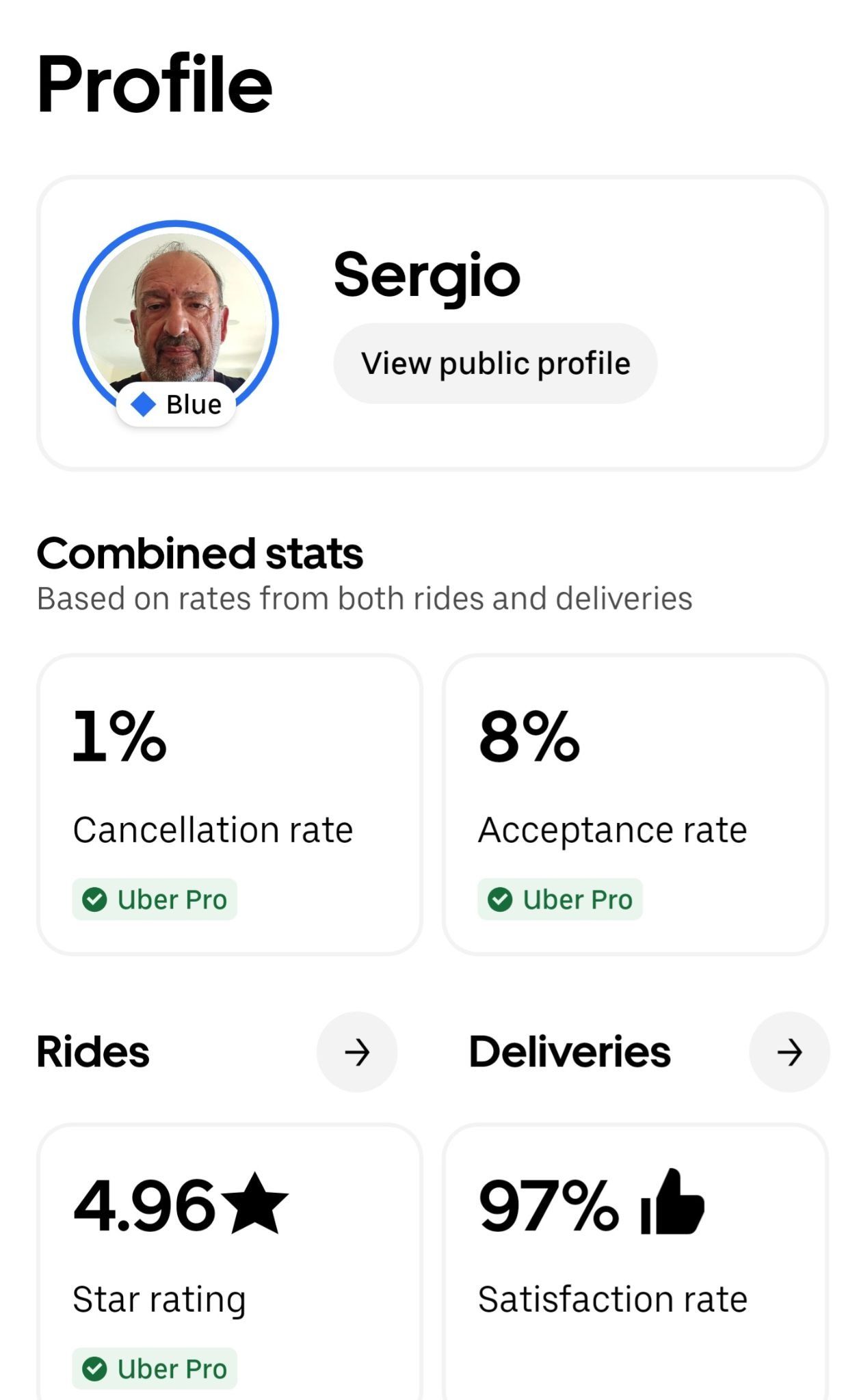
Here's what I've learned about what your rating actually does, and what it doesn't.
What does your driver rating actually measure?
Your rating is not necessarily an average of all the ratings you've ever received; platforms use a rolling FIFO (first in, first out) method. Understanding that rolling system is important.
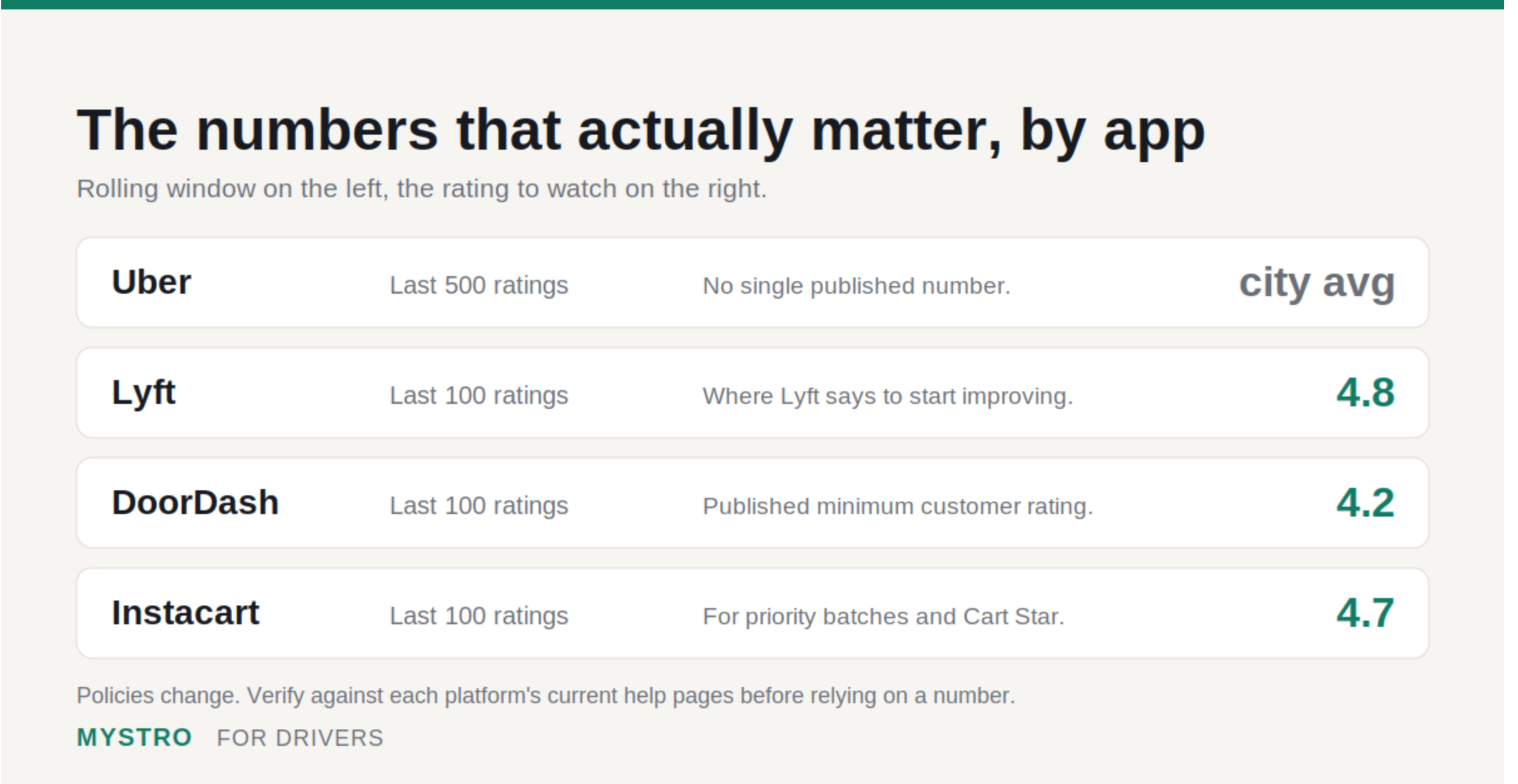
Uber, for example, calculates a driver's rating using the most recent 500 ratings. While Lyft, DoorDash, and Instacart all use the last 100 customer ratings.
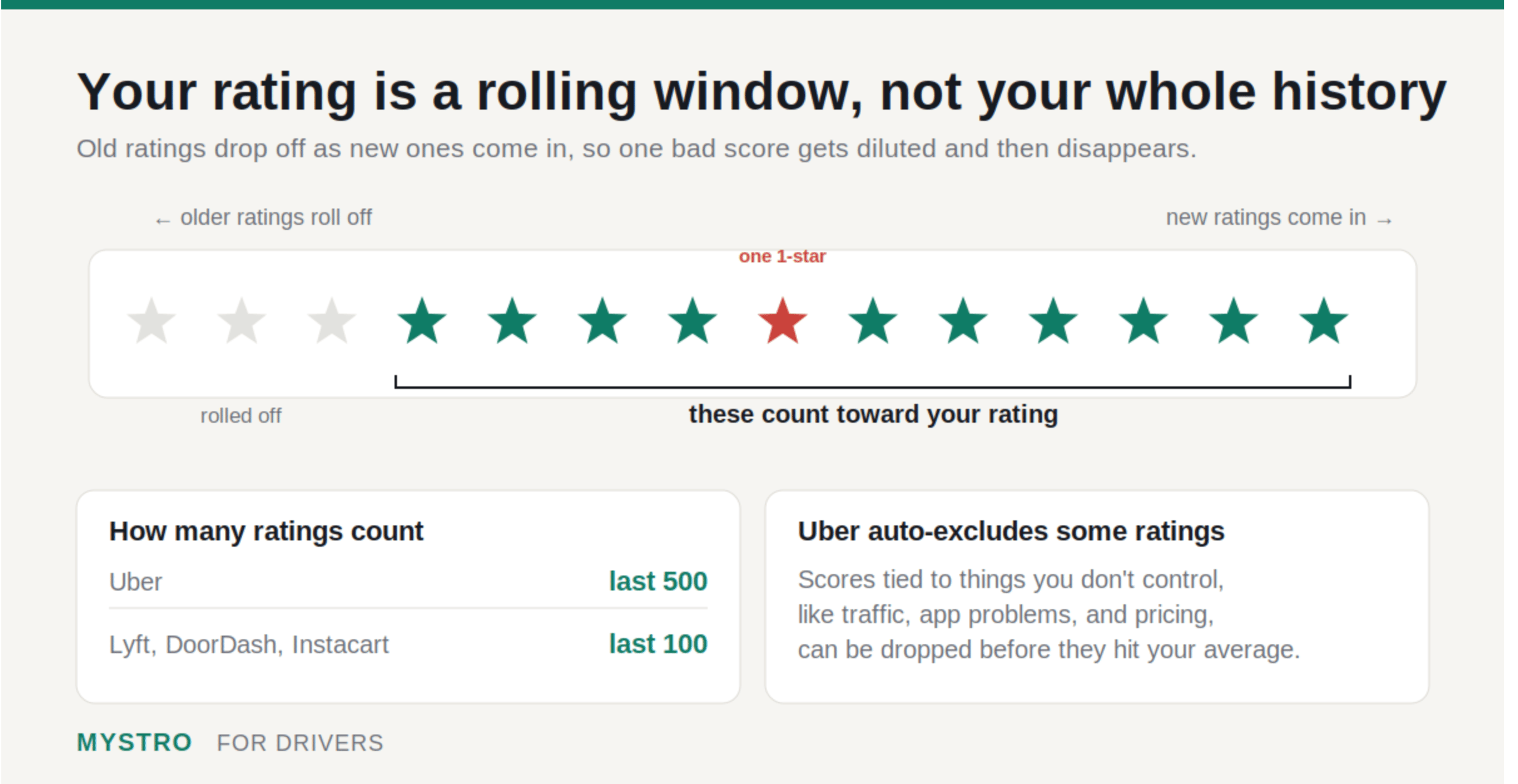
If you have hundreds of good ratings and someone gives you one star because they didn't like the price of their Uber ride, that one rating isn't going to destroy your average. And eventually, older ratings are removed from the calculation as newer ratings come in. Uber also says it automatically excludes certain ratings associated with things outside a driver's control, including traffic, app problems, pricing issues, and some other circumstances.
Does your rating affect the offers you get?
No platform has a blanket rule that says, "Your rating dropped from 4.98 to 4.95, so we're going to send you worse offers." Uber does say consistently low ratings may limit access to some opportunities and features, while high ratings can help unlock certain rewards through Uber Pro. Lyft similarly ties ratings into its rewards system, while Instacart explicitly connects a 4.7+ rating with priority access to batches.
So yes, ratings can matter. But that is very different from saying the algorithm automatically punishes you every time your rating moves down by a hundredth.
When does a low rating actually become a problem?
A low rating becomes a problem when it drops toward a platform's minimum threshold or starts costing you access to a specific program or benefit. And each app has a different number, so there's no single figure to point to. Consistently low ratings can put your account at risk and may limit access to certain opportunities and features, so it’s important to be aware of what will affect your bottom line.
Want to drive for multiple apps at the same time? Filter offers and choose the best one using Mystro.
What Uber rating gets you deactivated?
Uber does not publish one universal deactivation number in its current U.S. driver help materials. Instead, it says that consistently low ratings can put your account at risk and may limit access to opportunities and features. Uber also automatically protects drivers from certain ratings outside their control.
What Lyft rating is too low?
Lyft is more explicit. Your driver rating is based on your last 100 ratings, and Lyft says that if your rating falls below 4.8, you should consider ways to improve it. Consistently low ratings can put you at risk of deactivation. Lyft also says it can exclude the lowest rating from your last 100 rides and may remove ratings tied to circumstances outside your control.
What DoorDash rating gets you deactivated?
DoorDash publishes a minimum customer rating of 4.2. The rating is based on your last 100 customer ratings. If your rating falls below the applicable threshold, your account may be deactivated. DoorDash also has separate requirements for completion and other performance metrics.
What Instacart rating do you need?
Instacart uses a 4.7 rating threshold for priority batch access and Cart Star benefits. Its current system calculates the rating from the last 100 customer ratings and includes protections for certain low ratings. Instacart has specifically acknowledged that factors such as out-of-stock items, severe weather, app outages, and other circumstances can affect a customer's experience without being the shopper's fault.
Not every bad rating is your fault
This is something every gig worker eventually learns. A passenger gets hit with surge pricing and blames you. The restaurant takes 30 minutes to prepare an order, and the customer blames you. Traffic turns a 15-minute ride into a 35-minute ride; the GPS sends you to the wrong entrance. The customer wanted an item that was out of stock.
None of those things necessarily have anything to do with the quality of your work. Both Uber and Lyft say they automatically remove ratings tied to things you can't control, like traffic or app problems, so at least some of those unfair scores never touch your average.
Why one bad rating feels worse than it is
Let's say you have 100 five-star ratings and then receive one one-star rating. Your average doesn't become 4.0. It becomes roughly 4.96. And the more ratings you accumulate, the less impact one bad rating has. That's exactly why a driver with hundreds of ratings shouldn't lose sleep over one mystery one-star review. The exception is when you're new and have very few ratings. A single bad score can move the needle dramatically because there isn't much history to dilute it.
How to improve your rating without obsessing over it
You don't need to become a five-star concierge. Keep the vehicle clean. Communicate when you're running late. Don't create unnecessary drama. Follow pickup and drop-off instructions. For delivery, keep food secure and handle the handoff professionally. Consistency beats perfection!
Driver rating FAQs
Quick answers to the rating questions drivers ask most.
What's a good driver rating?
On Uber and Lyft, anything in the high 4.80s is generally a strong rating. Lyft specifically flags 4.8 as an important threshold.
Can passengers and customers see my rating?
Yes. Ratings are generally visible to customers or passengers before or around the time they request service, although individual ratings and the submitters remain anonymous.
Does one bad rating matter?
Usually, not much, especially when you have a large number of ratings. Hundreds of good ones dilute one bad score.
What rating may get you deactivated?
There isn't one universal number. Consistently low ratings put your account at risk. Lyft flags 4.8 as the point to start improving, DoorDash lists 4.2 as its minimum customer rating, and Instacart uses 4.7 for priority batch access.
So, should you worry about your rating?
Use ratings as a tool, not an obsession. Ratings go both ways. Drivers should also use their ability to rate passengers. Remember, it is your private car; ride-sharing is not a chauffeur-driven limousine service. If someone is excessively rude or disrespectful, makes unreasonable demands, or causes a problem during the trip, rate them honestly. The point isn't revenge. Over time, ratings can help reduce the chances of being matched with the same problematic passengers again.
Think of ratings as one more piece of information, not the most important number on your dashboard. Don’t chase perfection. I wouldn't spend money on water, candy, snacks, or other extras simply because you're afraid a passenger won't give you five stars.
Remember why you're driving in the first place. You're here to make money. Your time has value. Your car has expenses. And every trip should be evaluated as part of a larger business strategy.
That's where Mystro can help. You can't control whether a passenger gives you four stars because they didn't like surge pricing. But you can control which offers you accept.
Instead of obsessing over a rating you can't completely control, focus on the numbers you can control. Set your own rules. Filter out the offers that don't meet your standards with Mystro. Pay attention to your hourly earnings, your cost per mile, and the trips that actually make financial sense.
Mystro's free Cost Per Mile Calculator can do that math for you.
At the end of the day, a 5.00 rating is nice, but you don’t get paid more by the platforms for it. Because the goal isn't to be the perfect Uber or Lyft driver. The goal is to be a profitable one.
One more thing before you go. We're running a short reader survey to figure out what you want to hear about. It's what will help us shape the future of this newsletter.
P.S. Want to write for this newsletter? Let us know.
This post first appeared in The Mystro Newsletter — driver tips, earnings strategies, and Mystro updates, in your inbox every week.