ICE vs EV for Rideshare: 10 Years and 500,000 Miles of Data
 By Larry “Devin” Carter
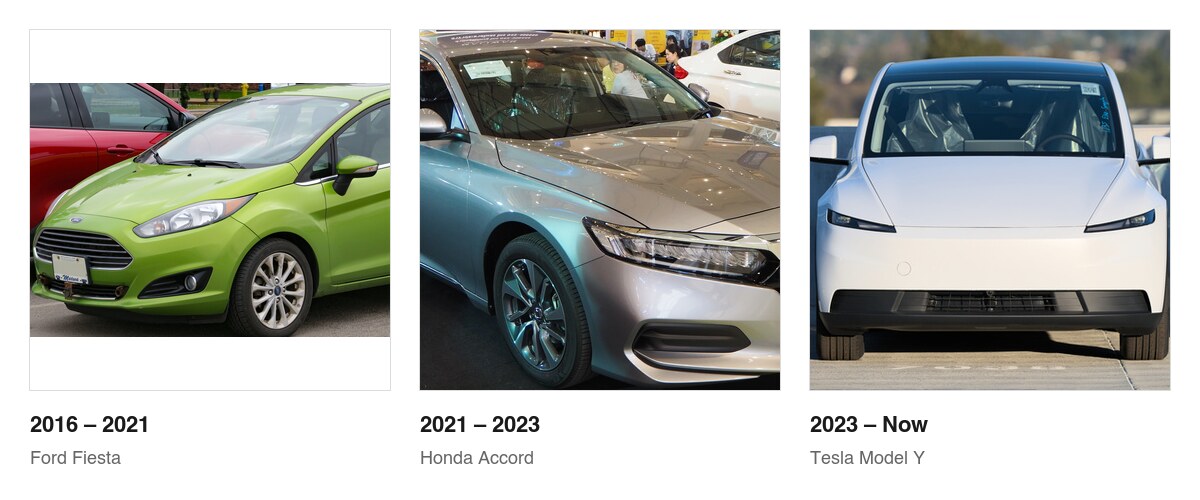
Photos: Ford Fiesta © Wikimedia Commons (CC BY-SA 4.0); Honda Accord © Wikimedia Commons (CC BY-SA 4.0); Tesla Model Y © Dllu / Wikimedia Commons (CC BY-SA 4.0).
In 2016, I was working as a craft brewer in a rural Tennessee town. It was a labor of love and definitely not financially beneficial, so I started looking for a way to supplement my income. Rideshare was new and all the rage, so I bought a secondhand 2012 Ford Fiesta, spent a week fixing it up, and began what has turned out to be a decade-long adventure. Over that time, through Uber, Lyft, DoorDash, and Uber Eats, I have cycled through three vehicles: that humble Fiesta (2016–2021), a 2019 Honda Accord (2021–2023), and a 2023 Tesla Model Y Long Range (2023–2026). The shift from gas to full electric was not just about saving on fuel. It transformed my bottom line, my work experience, and my long-term profitability.
I will break this down in three parts: upfront investment, operating costs, and earning potential. A caveat first: even though rideshare is technically my second job, I still put over 50,000 miles a year on the car — that is high for most drivers, so take the numbers below through that lens. Everything that follows comes from my own records.
At a Glance: Three Cars, Ten Years
| 2012 Ford Fiesta | 2019 Honda Accord | 2023 Tesla Model Y LR | |
|---|---|---|---|
| Years owned | 2016–2021 | 2021–2023 | 2023–2026 |
| Total miles driven | 231,489 | 91,245 | 198,280 |
| Purchase price | $6,500 | $19,000 | $37,500 ($45,000 sticker, less federal EV incentive) |
| Total fuel / charging | $23,947.14 gas | $12,503.95 gas | $7,525.91 ($2,313 home + $5,213 fast charging) |
| Oil changes | 27 | 11 | 0 |
| Tires replaced | 22 | 9 | 17 |
| Major drivetrain work | Transmission rebuild; junkyard engine replacement at 240k | None | None |
| Uber / Lyft tiers qualified | UberX, Eats, basic Lyft (late) | + Uber Comfort | + Comfort Electric, Business, Business Electric, Lyft Black |
| Average annual earnings | $47,287.67 | $64,531.68 | $97,027.36 |
Upfront Costs
Every rideshare driver starts with the same question: what car to buy or lease.
In 2016, I snagged a used 2012 Ford Fiesta for $6,500. It was cheap, reliable enough for basic UberX and later Eats. No frills — just four doors and decent gas mileage.
By 2021, after I was T-boned by a drunk driver, I saw a chance to upgrade my clientele and decided to move into a 2019 Honda Accord for Uber Comfort. I snagged it for a deal at $19,000. It was far more comfortable for both me and my passengers — gone were the occasional complaints about how small my car was. But Comfort proved to be less of an upgrade than I had hoped. The majority of my rides were still UberX, and Comfort only paid slightly better than X.
In 2023, I was carjacked at gunpoint. The Accord was gone, and I ended up in Hertz’s rental program while I figured out my next move. That program turned out to be my introduction to Tesla. Within a couple of weeks, I fell in love and ordered a 2023 Tesla Model Y Long Range. The sticker was $45,000, but federal EV incentives at the time brought the net cost to $37,500. The extra room, massive cargo space, and the customer “cool” factor were all huge upgrades. Plus the Tesla opened up Electric, Comfort Electric, Business, and Business Electric, which drastically cut down on basic UberX rides, though did not eliminate them.
Upfront purchase cost
What I paid out of pocket for each car. The Tesla’s figure is net of federal EV incentives.
Operating Costs
Once on the road, expenses add up: fuel or charging, maintenance, insurance, tires, cleaning, and registration. I tracked everything meticulously.
Fiesta (~5 years, 231,489 miles). Brake pads 3 times, brake rotors once, a very costly transmission rebuild, a junkyard engine replacement at 240,000 miles, A/C leaks and replacement on 3 occasions, a coolant fan replacement, 2 wheel bearings, 2 sets of plugs and wires plus an additional set when the engine swap happened, timing belt and water pump, 5 cabin air filters and engine filters, 22 new tires (regular wear plus unexpected road damage), 27 oil changes, and $23,947.14 on gas. This car was retired at over 300,000 miles through no fault of its own. It did me well for many years, and I miss my little green hatchback.
Accord (~2 years, 91,245 miles). Similar story, but with fewer miles to spread the wear over. Brake pads and rotors once, an A/C leak repair, 1 set of plugs and wires, 2 cabin air filters and engine filters, 9 new tires, 11 oil changes, and $12,503.95 on gas. It was a solid but boring car, taken from this world too soon.
Model Y (~4 years, 198,280 miles). This is where things change. 1 wheel bearing, 2 cabin air filters, 17 new tires (keep it on Chill mode or you will burn through tires), $2,313.27 home charging and $5,212.64 fast charging. The thing runs on practically nothing. It feels like driving for free compared to the gas cars. And with far fewer moving parts than a typical ICE drivetrain, there is just less to break.
Qualitatively, the EV meant less downtime — no more oil changes or surprise shop visits. For DoorDash deliveries, the quiet cabin and instant torque made stop-and-go traffic less exhausting. Passengers loved the smooth ride and the tech, which boosted my ratings and tips.
“Yesterday I spent $21.32 total on charging and was able to make $533 — and that’s after rates here recently went up for fast charging. Most of my charging happens at home.” — A typical day in the Model Y
Earning Potential
Earnings are not just about miles. They depend more on what type of rides your vehicle qualifies for, the tips you can earn, and your market’s ability to support charging. Basic UberX and Eats paid decently in my area, but moving up to Comfort, Electric, Business, and Black (on Lyft) was huge.
Fiesta — $47,287.67/yr average. Not great, but it got me started. When I first started I could only do UberX in a nearby city. As the services expanded, DoorDash came online, followed by Uber Eats. Lyft also moved into the area, but at the time they did not allow sub-compacts on their platform. I was able to add Lyft to my rotation near the end of the Fiesta’s life.
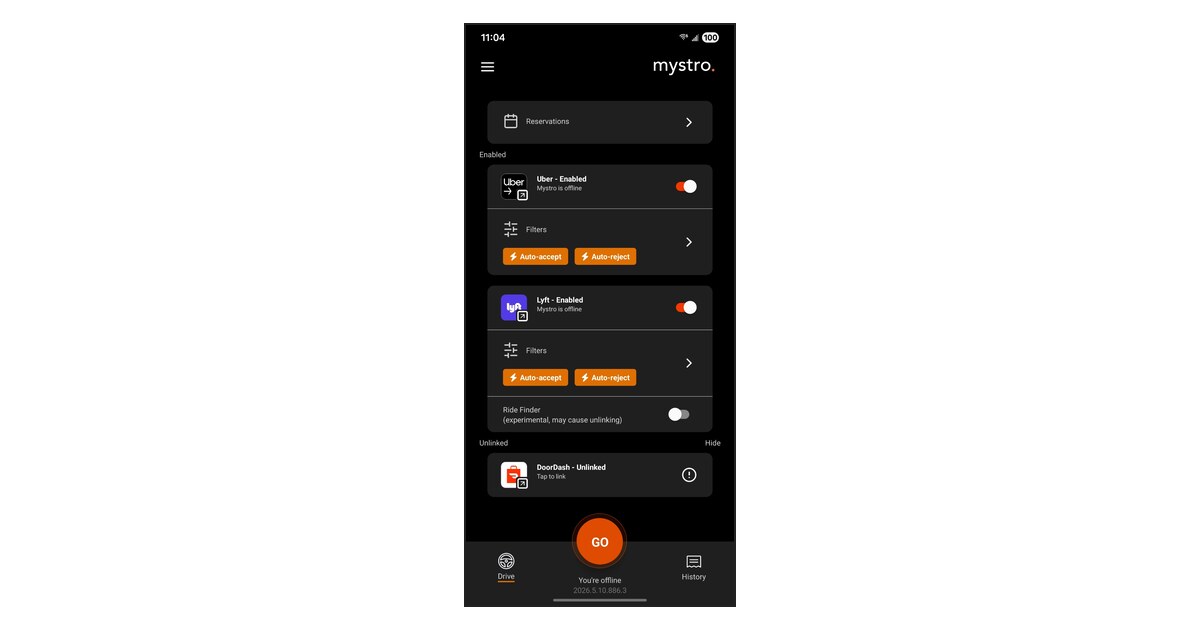
Accord — $64,531.68/yr average. The midsize sedan unlocked Comfort requests, and my earnings jumped accordingly. Passengers seemed to tip a little more and complain less. I did not track exactly what percentage of my rides were Comfort vs. basic, but I would guess it averaged around 20%. Some of the lift here can also be attributed to inflation, COVID, and adopting Mystro during this period — among other factors.
Model Y — $97,027.36/yr average. As an EV, it qualifies for Comfort Electric, Business, and even Black on Lyft. Basic Lyft and UberX rides are now less than half of what I do, probably around 30%. And passengers genuinely love this car. You get the occasional hater, but in general customers are excited to get in. Tips are up, my rating stays at 4.99 (you cannot please everyone), and Autopilot is a great option for staying out of accidents and getting home when I have overworked myself. So far I am averaging $97,027.36 a year, even with Waymo moving into my market and Uber pulling its financial incentives for EV drivers. Some of that increase is from inflation and experience. I make fewer mistakes than I used to.
Where every monthly dollar goes
Bars stack to total monthly earnings. The green slice is what stays in my pocket after the car payment and operating costs. Hover/tap any segment for the exact figure.
The Verdict
Switching to the Model Y was not cheap upfront, but it cut my per-mile costs by over ~60% compared to the ICE cars, while also lifting my earnings. Run the math and the Fiesta covers its monthly payment about 55 miles sooner than the Model Y (the Fiesta’s payment was lower), but past mile 741 the Model Y pulls ahead thanks to better profit retention per mile. The midsize sedan was never the best option at any mileage. And do not forget that the ICE numbers above are from a period when gas was historically cheap relative to general inflation. Fatigue reduction is another factor: EVs are just plain fun to drive.
Miles needed each month to cover the car payment
After operating costs are paid for. The Fiesta clears its payment 55 miles sooner than the Model Y (389 vs. 444), because the Fiesta’s payment is so much smaller.
Cumulative profit vs. miles driven
Cars with bigger payments took more miles to start profiting. But the Tesla nets the most per mile thanks to both higher earnings from premium ride types as well as lower operating costs.
Would I recommend the Tesla path today? Absolutely, for anyone logging 20,000 miles a year or more in rideshare. The ICE vehicles got me through the learning curve affordably, but the EV future is here. Rising gas prices, maintenance hassles, and the growing availability of EV charging all point one direction. If you are starting out, consider an older Tesla for the low entry, but plan the switch to electric as soon as your finances allow. Your wallet, and your passengers, will thank you.
Frequently Asked Questions
Does a Tesla Model Y qualify for Uber Comfort Electric?
Yes. A Tesla Model Y qualifies for Uber Comfort Electric, Uber Business, Uber Business Electric, and Lyft Black, in addition to standard UberX and Lyft rides. Qualifying for the premium electric tiers significantly reduces the share of basic low-paying rides in your queue and lifts your effective earnings per mile.
How much does it cost to drive a Tesla for rideshare per month?
Over 4 years and nearly 200,000 miles of rideshare driving, my 2023 Tesla Model Y Long Range averaged about $234 per month in operating costs — roughly $2,313 per year in home charging plus $5,213 per year in fast charging, with very little spent on maintenance beyond tires. That is about 65% less than the monthly operating cost of a comparable gas vehicle.
Is a Tesla worth it for Uber and Lyft driving?
For high-mileage rideshare drivers (20,000 miles per year or more), yes. The Tesla Model Y’s lower per-mile operating costs and access to premium ride tiers like Comfort Electric, Business, and Lyft Black more than offset its higher monthly payment. In a head-to-head comparison normalized to $1 per mile of earnings, the Tesla’s cumulative profit overtakes a comparable Ford Fiesta at around 741 miles of monthly driving — and that gap widens further once Tesla’s higher real-world per-mile earnings are factored in.
What is the cheapest car to drive for Uber?
For lowest upfront cost, a used economy car like a Ford Fiesta or Honda Civic. But once you factor in per-mile operating costs (fuel and maintenance), an EV typically wins. A used Tesla Model 3 or Model Y is often the best total-cost option for full-time rideshare drivers, especially in markets that support premium electric ride tiers.
How many miles can a rideshare car last?
My 2012 Ford Fiesta lasted over 300,000 miles before retiring, after one engine replacement and a transmission rebuild. Modern EVs like the Tesla Model Y have far fewer moving parts than a gas car and can be expected to last similarly long or longer, with significantly less downtime for maintenance.